
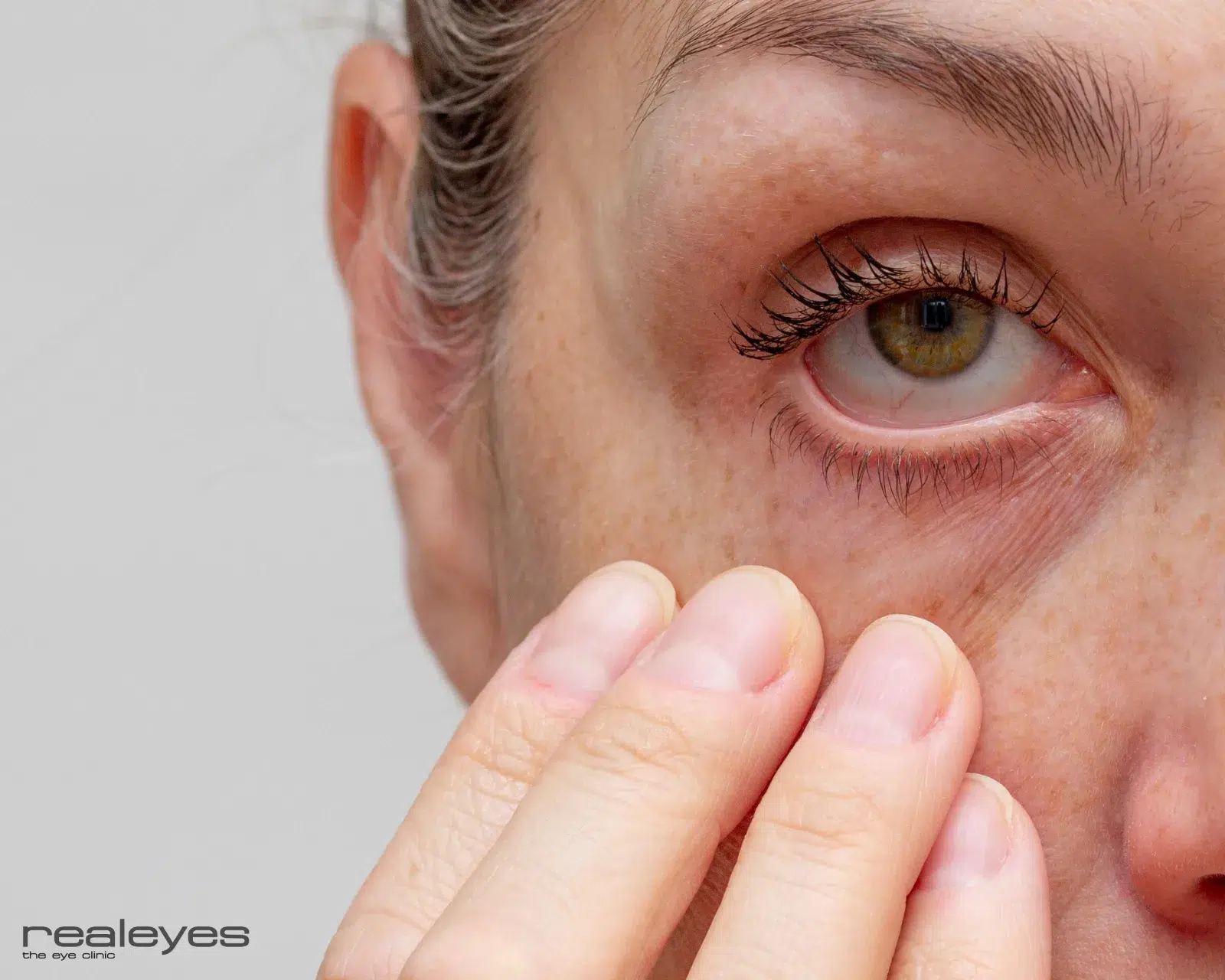
If your eyes feel gritty, sore or tired, a dry eye assessment is the most reliable way to find out why. Drops from the chemist help some people, but plenty of others spend months switching brands without any real relief. That’s because dry eye has several causes, and the same symptoms can come from very different problems underneath. Without the right tests, it’s hard to know which treatment will actually work.
This guide walks you through what happens at a dry eye appointment, explains each test in plain language and covers what treatment usually looks like afterwards.
What Is a Dry Eye Assessment and Who Needs One?
A dry eye assessment is a structured examination of your tears, eyelids and the front surface of your eye. It treats dry eye disease as a medical condition of the tear film and ocular surface, not simply “tired eyes”. The goal is to identify the cause so treatment can target it directly.
How Dry Eye Develops: Tear Film, Oils and Evaporation
Every time you blink, a thin layer of tears called the tear film spreads across the front of your eye. It keeps the surface moist, smooth and protected, and it has three layers:
Mucin layer: the innermost layer, which helps tears stick to the eye.
Watery layer: the middle layer, which hydrates and nourishes the cornea, the clear window at the front of the eye.
Oily layer: the outer layer, which sits on top and slows evaporation.
There are two main types of dry eye, depending on which part of the tear film isn’t working.
Evaporative dry eye is the most common type. The oily layer is made by the meibomian glands, tiny glands along the edges of your eyelids. When these glands become blocked, or the oil they produce thickens, the oily layer thins and tears evaporate too quickly.
Aqueous-deficient dry eye develops when the tear glands don’t produce enough of the watery layer.
Many people have features of both, which is known as mixed dry eye. Your assessment will show which type you have, and that shapes your treatment.
Common Symptoms of Dry Eye
Symptoms range from slight irritation to severe pain, and they often change throughout the day. Some people notice them most when they wake up. Others find they build up after hours at a screen or by the evening. In our dry eye clinic, the symptoms we hear about most often are:
A gritty or itchy feeling
Burning, stinging or the sense that something is under the eyelid
Redness of the white of the eye and swollen eyelids
Sensitivity to light
Blurred vision that comes and goes
Discomfort when wearing contact lenses
Excessive watering
That last one surprises people. When the surface of the eye dries out, it triggers reflex tearing: a flood of watery tears without enough oil to stay put. Our article on why your eyes water all the time explains this in detail.
Some symptoms need same-day attention rather than a routine appointment:
Severe eye pain
Sudden changes in vision
A very red eye with intense light sensitivity
Who Is Most at Risk and When to Book an Assessment
The most common causes of dry eye and risk factors include:
Age: dry eye can occur at any age but becomes more common after 50.
Hormonal changes: particularly around the menopause.
Screens: we blink less when we concentrate. Our guide to whether using a computer can damage your eyes explains why.
Contact lens wear: lenses can disrupt the tear film and increase evaporation, especially with long wearing times.
Environment: air conditioning, central heating, wind and aeroplane cabins.
Medications: including antihistamines, antidepressants, some blood pressure tablets and the contraceptive pill.
Health conditions: such as diabetes, thyroid disease, rheumatoid arthritis, lupus and Sjögren’s syndrome.
Eyelid problems: including blepharitis and lids that don’t close fully during sleep.
Book a dry eye assessment if any of these apply:
Your symptoms have lasted more than a few weeks.
Over-the-counter drops aren’t helping.
Discomfort is affecting your work, driving or lens wear.
What Happens at a Dry Eye Assessment, Step by Step
Equipment varies between practices. Many UK opticians include a basic dry eye check within a standard sight test, while others run a longer, dedicated appointment with specialist testing. Either way, the broad sequence is similar.
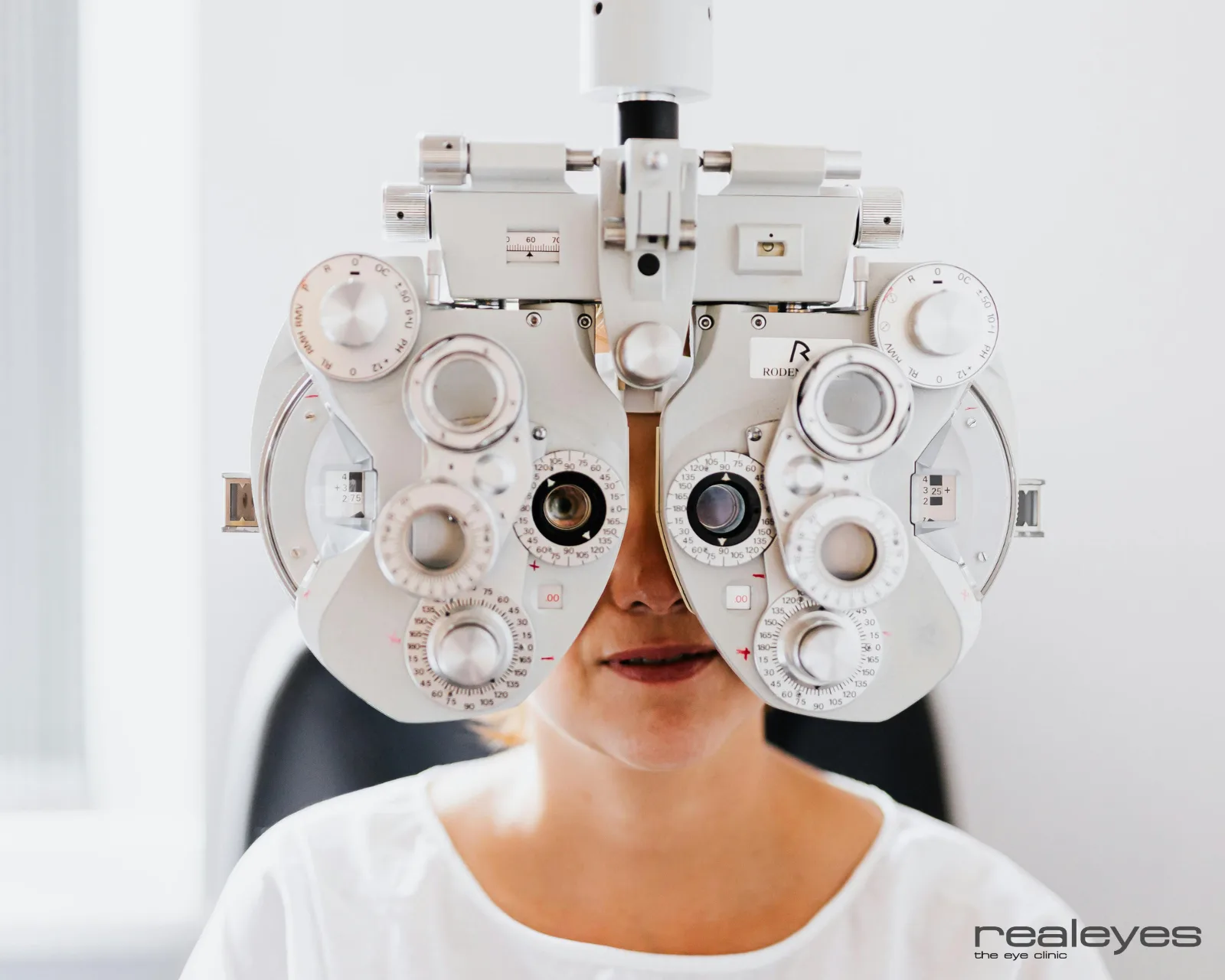
Step One: Your History and Symptom Questionnaire
Your optometrist starts by asking questions. Expect to cover when your symptoms are worst, your screen habits, medications, general health, contact lens wear, sleep, and your home and work environments.
Many practices use a validated questionnaire. Common examples are the OSDI (Ocular Surface Disease Index) and SPEED (Standard Patient Evaluation of Eye Dryness). Both turn your answers into a symptom score.
The TFOS DEWS II report, the international consensus on dry eye from the Tear Film & Ocular Surface Society, treats an OSDI score of 13 or above as a signal for further testing. Your answers also shape which tests follow.
Step Two: Examining the Eyelids, Blink and Eye Surface
Next comes the slit lamp, a microscope with a bright, adjustable light. Using it, the optometrist will:
Check your lid margins and look for debris at the base of the lashes, a common sign of blepharitis.
Assess whether the meibomian gland openings are blocked.
Watch how completely you blink.
Look for redness or damage on the cornea and conjunctiva (the thin membrane covering the white of the eye).
This part is non-invasive and painless. You simply rest your chin on a support and look ahead. If blepharitis shows up, our article on the fastest ways to clear blepharitis covers what helps.
Step Three: Testing Your Tear Film
Your optometrist will then run tests to measure how stable your tears are, how much tear fluid you produce and how healthy your oil glands and eye surface are. The tests used depend on your symptoms and the practice’s equipment.
Tear break-up time (TBUT) and tear film stability
Tear break-up time measures how long your tear film stays intact after a blink. The optometrist adds a little fluorescein, an orange-yellow dye, then watches under blue light for dry patches to appear. Newer instruments measure non-invasive break-up time by projecting a pattern onto the eye, with no dye needed.
Clinicians commonly read a break-up time under 10 seconds as a sign that your tear film is unstable. You hold your eyes open briefly, which feels a little tiring but not painful.
Tear volume tests: tear meniscus height and Schirmer’s test
Volume tests show whether you produce enough of the watery layer. Many practices now photograph the tear meniscus, the thin strip of fluid along the lower lid, without touching the eye.
Step Four: Discussing Findings and Next Steps
Finally, the optometrist pulls everything together. They grade the severity, identify your type of dry eye and agree a plan with you.
Some findings lead to a referral to your GP or an ophthalmologist (a hospital eye specialist), such as signs of an underlying condition or significant damage to the eye’s surface.
How to Prepare for Your Dry Eye Appointment
A little preparation makes your dry eye appointment far more useful. Your history counts as much as the tests.
What to Bring and Note Down Beforehand
A list of medications and supplements that you take
A symptom diary covering one or two weeks: times of day, triggers and screen hours
The names of any eye drops you use and how often
Your glasses, plus your contact lenses or their details
The questions you want answered
Contact Lenses, Eye Make-Up and Eye Drops on the Day
Check with the practice about contact lenses. Many ask you to wear glasses and bring your lenses along.
Skip heavy eye make-up, as it gets into the tear film and hides the lid margins. Avoid eye drops for a few hours beforehand unless told otherwise, because they temporarily mask the problem and can skew your results.
Understanding Your Dry Eye Assessment Results
Your results usually cover three areas: the type of dry eye, its severity and the factors contributing to it. Readings can shift from day to day, so your optometrist looks at the overall pattern rather than any single number.
Types of Dry Eye: Evaporative, Aqueous-Deficient and Mixed
Each of the three types shows up differently in testing:
Evaporative: your tear film breaks up quickly after a blink (usually in under 10 seconds), and meibography may show blocked oil glands, or glands that have shrunk or stopped working altogether.
Aqueous-deficient: a low tear meniscus height or a low Schirmer reading, showing your eyes aren’t producing enough watery tears.
Mixed: features of both, which is common.
Book a Dry Eye Assessment at Realeyes
A dry eye assessment replaces guesswork with answers. It identifies your type and severity of dry eye, explains why your symptoms behave the way they do and points to treatment that targets the cause.
At the Realeyes Dry Eye Clinic, a specially qualified optician will:
Run specialist tests to find out what’s causing your symptoms
Explain your results in plain language
Create a personalised treatment plan, from specialist eye drops and lid care to more advanced in-clinic treatments
Monitor your progress regularly and adjust your treatment if needed
If your eyes have felt gritty, sore or tired for more than a few weeks, don’t keep guessing. Book your dry eye assessment online, call your local branch or pop in to see us. Find your nearest practice on our branches page.

