

If you're weighing up Rexon-Eye vs IPL, you've probably already tried the drops, the warm compresses and the screen breaks. Your eyes still feel gritty by mid-afternoon, sting in the wind, and sometimes water so much you wonder how they can possibly be dry.
You're not alone. In our experience, many patients arrive at their first appointment having tried several brands of drops that only take the edge off.
In-clinic treatments now aim at the causes of dry eye rather than just masking symptoms. Two of the most talked-about options are Rexon-Eye and intense pulsed light (IPL). This article explains how each works, what a session feels like, how many you're likely to need and who tends to suit which, so you can walk into your assessment knowing what to ask.
Understanding Dry Eye Before You Compare Treatments
Choosing between Rexon-Eye vs IPL makes more sense once you know what's going wrong with your tears. Your tear film has three layers: an oily outer layer, a watery middle layer and a mucus layer that helps tears stick to the eye.
Evaporative vs Aqueous-Deficient Dry Eye
Dry eye usually falls into two broad types:
Aqueous-deficient dry eye: your eyes don't produce enough of the watery part of tears.
Evaporative dry eye: you produce tears, but they evaporate too quickly because the protective oily layer is thin or poor quality.
Evaporative dry eye is the more common type, and many people have a mix of both. The NHS page on dry eyes gives a helpful overview of symptoms and everyday self-care.
What Is Meibomian Gland Dysfunction?
Meibomian glands are tiny oil glands along the edges of your eyelids. In meibomian gland dysfunction (MGD), the oil they produce becomes thick or the glands become blocked, so less oil reaches your tears.
MGD is a leading cause of evaporative dry eye. That's why meibomian gland dysfunction treatment sits at the heart of both Rexon-Eye and IPL.
What Is Rexon-Eye Dry Eye Treatment?
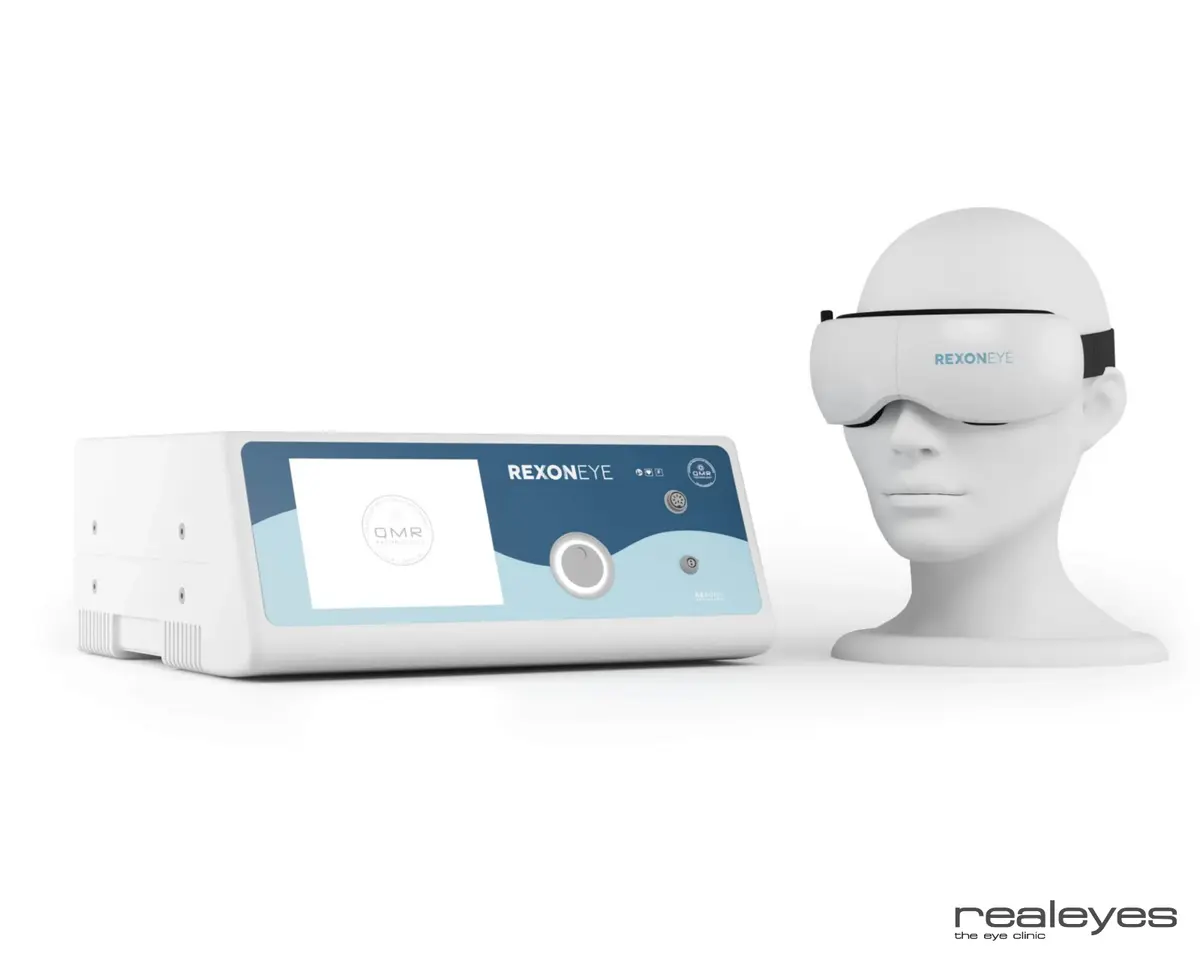
Rexon-Eye is a non-invasive device developed in Italy. Instead of light or heat, it uses a technology called Quantum Molecular Resonance.
How Quantum Molecular Resonance Works
Quantum Molecular Resonance (QMR) delivers very low-intensity, high-frequency electrical waves to the tissue around your eyes. The manufacturer describes this as stimulating the cells of the eyelids and glands, helping them return to more normal function.
Because it works on the glands themselves, Rexon-Eye dry eye treatment is promoted for evaporative dry eye, with some clinics also using it for mixed dry eye where tear production is low. Research on Rexon-Eye is newer and smaller in scale than for IPL, so it's reasonable to ask your clinician what evidence informs their recommendation.
What a Session Feels Like
You lie back comfortably while a soft mask containing electrodes rests over your closed eyelids. Most patients feel very little, perhaps a faint tingle or gentle warmth, and many find it relaxing.
A session usually lasts around 20 minutes. You can drive, return to work and use screens straight afterwards.
How Many Sessions You'll Need
A typical course is four sessions, spaced about a week apart. Some patients need top-up sessions later, depending on how their symptoms respond. [PLACEHOLDER: Realeyes Rexon-Eye course structure and follow-up schedule]
What Is IPL Dry Eye Treatment?
Intense pulsed light (IPL) was used in dermatology long before it was adapted for dry eye. It's now widely offered as an IPL dry eye treatment in UK clinics.
How Light Therapy Targets Inflammation
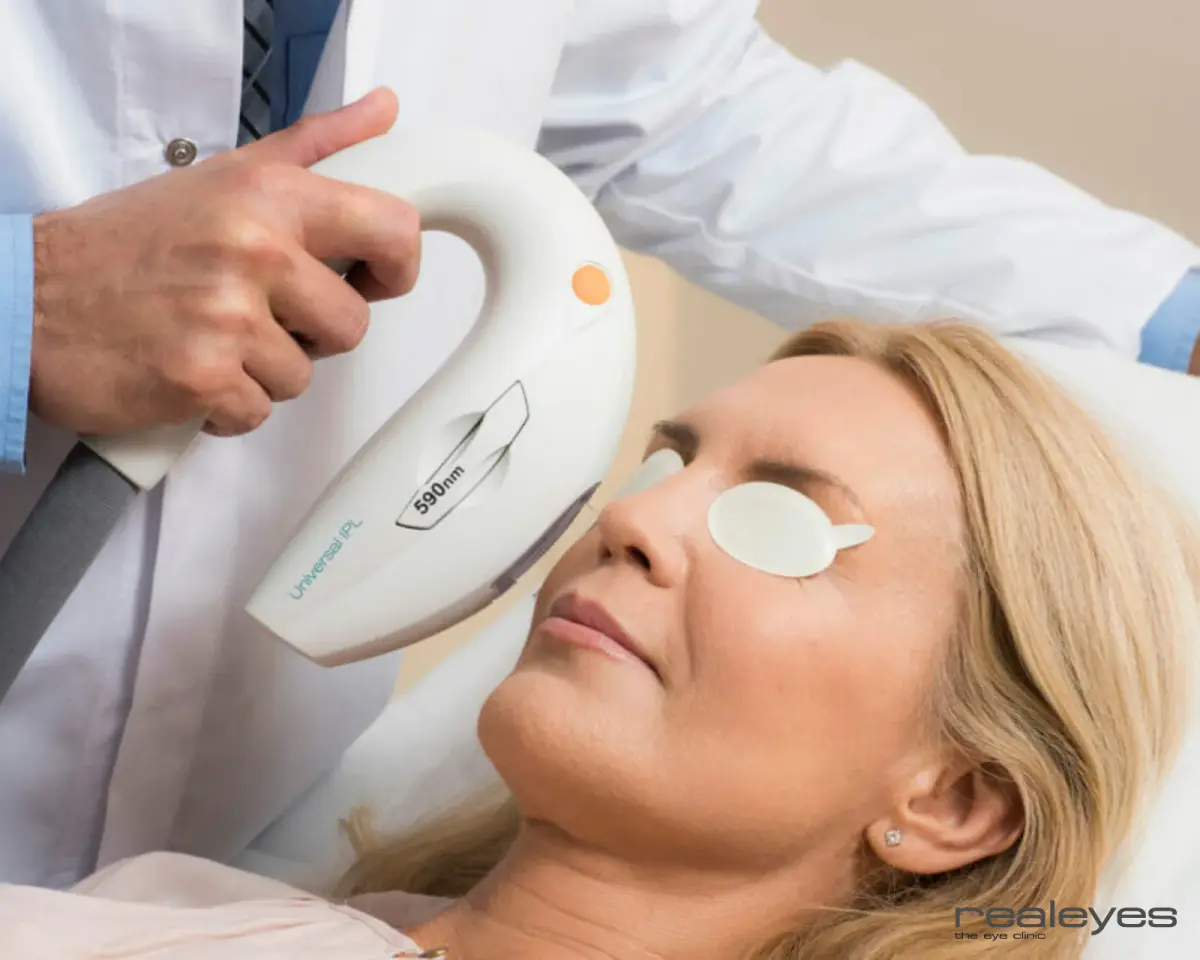
IPL applies controlled flashes of filtered light to the skin below your eyes. The light is thought to reduce tiny abnormal blood vessels along the eyelids that feed inflammation, and to warm the meibomian glands so thickened oil flows more freely.
The National Institute for Health and Care Excellence (NICE) has published interventional procedures guidance on IPL for meibomian gland dysfunction. It raised no major safety concerns but noted that evidence on how well it works was limited at the time of publication, which is a fair point to discuss with your clinician.
What to Expect During IPL
Your eyes are covered with protective shields, and a cooling gel is applied to your cheeks. With each flash, most people feel a brief warm snap, often compared to a light flick from an elastic band.
Many clinics follow IPL with gentle expression of the meibomian glands to clear blockages. Mild redness can last a few hours, and you'll be asked to protect the treated skin from the sun.
A Typical IPL Course
Courses commonly involve three or four sessions, two to four weeks apart, with maintenance sessions later if symptoms return. [PLACEHOLDER: Realeyes IPL course structure and maintenance schedule]
Rexon-Eye vs IPL: Side-by-Side Comparison
Seeing Rexon-Eye vs IPL laid out together makes the differences far easier to spot.
At a Glance
| Rexon-Eye | IPL | |
|---|---|---|
| How it works | Low-intensity QMR electrical waves through a mask over closed eyes | Pulses of filtered light on the skin below the eyes |
| Best for | Evaporative and mixed dry eye, including MGD | MGD, especially with lid inflammation, visible blood vessels or rosacea |
| Typical sessions | Often 4, about a week apart | Often 3–4, two to four weeks apart |
| Comfort | Most feel very little, perhaps mild tingling | Brief warm snap with each flash |
| Downtime | None | Usually none; possible mild redness for a few hours |
| Suitability | Skin tone isn't a factor; not usually suitable with pacemakers or implanted electronic devices, epilepsy or pregnancy | Depends on skin type; not usually suitable with recent tanning, certain light-sensitising medicines or pregnancy |
The Differences That Matter Most
The biggest practical difference is the energy source. IPL uses light, so your skin type and recent sun exposure affect whether it's suitable; Rexon-Eye doesn't rely on light, so skin tone plays no part.
IPL also has a particular role where inflammation and visible blood vessels along the lids are part of the picture, such as in ocular rosacea. Your clinician will check your full medical history before recommending either.
Rexon-Eye vs IPL: Which Is Right for You?
No single option is the best treatment for dry eyes for everyone. The right choice depends on what your assessment reveals, so please have a professional eye assessment before deciding on any treatment.
When Rexon-Eye May Suit You Better
You have a darker skin tone or a skin type that isn't suited to IPL
You'd prefer a treatment with no light flashes and very little sensation
Your dry eye appears to involve low tear production as well as gland problems
When IPL May Suit You Better
You have rosacea or redness and visible blood vessels along your eyelid margins
Your assessment shows significant inflammation alongside blocked glands
You have a pacemaker or implanted electronic device, which would usually rule out Rexon-Eye
Can You Combine Rexon-Eye and IPL?
Sometimes, yes. For more stubborn MGD, some clinicians use both as part of a tailored plan, alongside lid hygiene and home care. We've found that many patients get the most benefit from a plan built around their specific gland health rather than a single treatment.
Frequently Asked Questions
Is Rexon-Eye Painful?
Most patients find Rexon-Eye painless. You may notice a faint tingling or mild warmth, and no anaesthetic is needed.
Does IPL Hurt?
IPL is usually well tolerated. Most people describe a quick warm snap with each flash, and the cooling gel helps keep you comfortable.
How Many Sessions of IPL for Dry Eye Will I Need?
Many patients have three or four sessions spaced a few weeks apart, followed by occasional maintenance. Your clinician will adjust this based on your progress.
How Much Does Dry Eye Treatment Cost in the UK?
Dry eye treatment cost in the UK varies with the treatment, the number of sessions and whether the assessment is included. Neither treatment is routinely available on the NHS, so most people pay privately. [PLACEHOLDER: Realeyes pricing for assessment, Rexon-Eye and IPL]
What Is the Best Treatment for Dry Eyes?
It depends on the cause. Drops, lid hygiene, Rexon-Eye, IPL or a combination may help, and an assessment is how you find out which suits you.
The Bottom Line on Rexon-Eye vs IPL
When it comes to Rexon-Eye vs IPL, neither is simply better. Rexon-Eye uses Quantum Molecular Resonance, involves very little sensation and isn't affected by skin tone. IPL uses light, may help where inflammation and lid blood vessels play a part, and has a longer history in dry eye care.
Both aim to improve how your meibomian glands work, and many patients find their symptoms ease noticeably over a course of treatment.
Your Next Step
If dry, gritty eyes are wearing you down, book a dry eye assessment at Realeyes to find out which treatment suits your eyes.
RealeyesUK Opticians
Suggested URL slug: /rexon-eye-vs-ipl
Internal link suggestions:
IPL treatment page: link "IPL dry eye treatment in UK clinics" in the IPL section to [PLACEHOLDER: Realeyes IPL page URL].
Rexon-Eye treatment page: link "Rexon-Eye dry eye treatment" in the Rexon-Eye section to [PLACEHOLDER: Realeyes Rexon-Eye page URL].

