
Why are my eyes watering all the time? For many people, the surprising answer is dry eye. When the surface of your eye becomes irritated or dried out, it triggers a rush of reflex tears that are too thin to soothe it, so they spill down your cheeks instead.
That sounds backwards, and it is one of the questions opticians hear most often. Allergies, blocked tear ducts, blepharitis and eyelid position also play a part. The right fix depends on which one is behind your symptoms.
This guide sorts the causes using one question: are you making too many tears, or are your tears failing to drain away? You'll also find a home-care routine, a quick guide to one-eye watering and the warning signs that mean you need help the same day.
Please treat what follows as general guidance rather than a diagnosis. If something feels wrong with your eyes, speak to an optician, pharmacist or GP.
How Tears Work: Why Do Eyes Water at All?
Making Tears vs Draining Them
Your eyes produce tears all day to keep their front surface moist, clear and protected. Each blink spreads a thin tear film across the eye. The excess drains through two tiny openings (called Puncta) in the inner corners of your eyelids and down into your nose.
Watering happens when this balance tips. Either your eyes make more tears than usual, or the drainage system can't carry them away fast enough.
Doctors call this Overflow Epiphora (the medical term for watery eyes or excessive tearing). Knowing which side of the equation is at fault is the starting point for any treatment.
7 Common Causes Why.
Several causes can overlap, so there's rarely one single answer to why your eyes are watering all the time. These are the ones we see most often.
1. Dry Eye and Reflex Tearing
Can dry eyes cause watery eyes? Yes, and dry eye is one of the leading reasons for constantly watery eyes. When the surface of your eye becomes dry and irritated, nerves send an alarm signal, and your tear gland responds with a flood of "reflex" tears.
The trouble is that these emergency tears are mostly water. They lack the oils and mucus that help a healthy tear film cling to the eye, so they spill over your lashes instead of soothing the dryness. In our experience, many people are surprised to learn that dry eye sits behind their watering.
2. Blepharitis and Meibomian Gland Dysfunction
Blepharitis is inflammation of the eyelid margins, often causing crusty lashes, sore lids and a gritty feeling. It frequently goes hand in hand with meibomian gland dysfunction (MGD), where the tiny oil glands along your lids become blocked or produce poor-quality oil.
Without that oily layer, tears evaporate too quickly, the eye dries out, and reflex watering kicks in. We regularly find MGD behind watering that patients had simply put down to "just my eyes".
3. Blocked Tear Ducts
When tears can't drain, they have nowhere to go but down your cheek. Typical blocked tear duct symptoms include:
watering that's often worse in one eye
sticky discharge or crusting on the lashes
swelling or tenderness near the inner corner of the eye
repeated eye infections
Blockages are common in babies and become more likely again in later life. Noticing one eye watering constantly? A drainage problem is one possibility to have checked.
4. Allergies
Hay fever, pet dander, dust mites and some cosmetics can all trigger allergic conjunctivitis. Watering usually comes with itching, redness and puffy lids, and tends to affect both eyes. Symptoms often follow a seasonal pattern or flare around a specific trigger.
5. Eyelid Problems
As we age, eyelid tissue can loosen. An eyelid that turns outwards (ectropion) can pull the drainage opening away from the eye, while one that turns inwards (entropion) causes lashes to rub against the surface. Both can lead to persistent watering and need assessment by a specialist.
6. Environmental Triggers
Watery eyes in the wind or in cold weather are very common, partly because cold, moving air dries the tear film and prompts reflex tearing. Indoors, air conditioning, central heating and long hours at a screen (when we blink less) can have a similar effect.
Streaming only outdoors on blustery days is usually a normal response. If it happens indoors too, an underlying dry eye problem may be making your eyes more sensitive.
7. Eye Infections Such as Conjunctivitis
Infective conjunctivitis can make eyes red, gritty and watery, sometimes with a sticky yellow or green discharge. Many cases clear up on their own within a couple of weeks. A pharmacist can advise in the first instance, unless you have any of the warning signs below.
When to See an Optician About Watery Eyes
Red Flags That Need Urgent Care
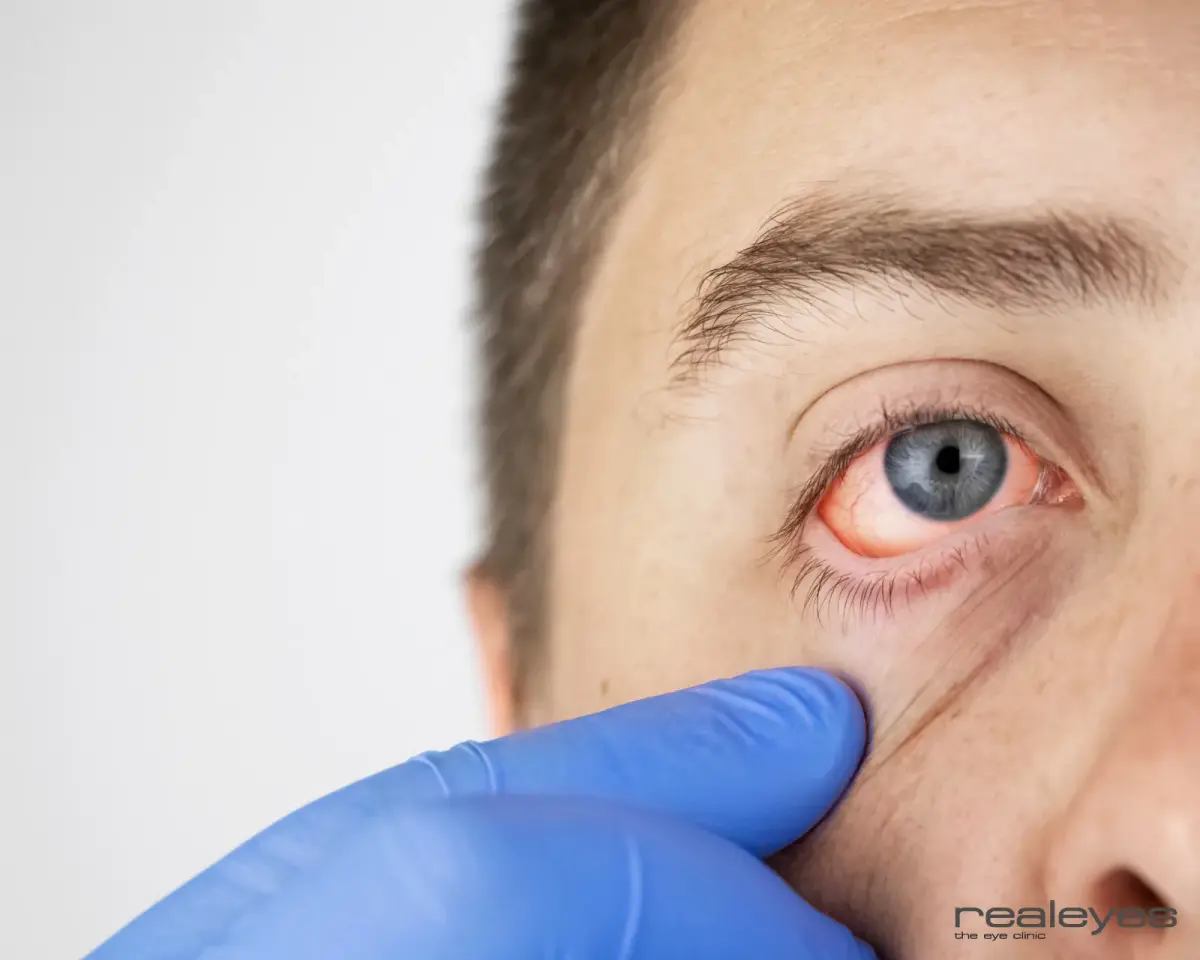
Seek urgent help if your watery eyes come with:
eye pain
sudden changes in your vision, such as blurring or loss of sight
an injury to the eye, or something stuck in it
chemicals splashed into the eye (rinse with clean water straight away)
sensitivity to light
a red, painful eye, especially if you wear contact lenses
Go to A&E or call 999 for serious injuries, chemical exposure or sudden loss of vision. For other urgent symptoms, contact NHS 111 or your local optician, as many offer urgent eye care appointments.
Persistent Watering Without Red Flags
Persistent watering should always be checked by an optometrist or eye specialist, even if it doesn't hurt. Book an appointment if watering lasts more than a few weeks, keeps returning, affects your daily life, or you notice one eye watering constantly for no obvious reason.
You can read more in the NHS guide to watering eyes.
How Constantly Watery Eyes Are Diagnosed and Treated
Assessment Comes First
Because the causes vary so widely, guessing rarely works. A thorough eye assessment looks at how much tear fluid you produce, how stable your tear film is, the health of your eyelid margins and oil glands, and whether your tear ducts drain freely.
At Realeyes, our Dry Eye Clinic carries out specialist tests to assess what’s causing your symptoms. Once we have a clear diagnosis, we’ll discuss the treatment options available and create a personalised treatment plan. This could be as simple as using specialist eye drops or, where appropriate, more advanced treatment such as special plugs to help increase tear flow. We’ll also monitor you regularly to make sure your treatment is working and make any adjustments if needed.
Getting the diagnosis right first can help prevent you spending time and money on treatments that don’t address the underlying problem.
Treatment Depends on the Cause
Watery eyes treatment in the UK varies according to what's driving the problem:
Dry eye and MGD: lubricating eye drops, lid hygiene and warm compresses, with in-clinic options such as [PLACEHOLDER: Realeyes in-clinic dry eye treatments] for persistent cases
Blocked tear ducts: sometimes a flushing procedure or minor surgery, arranged through a specialist referral
Eyelid problems: often corrected with a small surgical procedure
Allergies: avoiding triggers and using antihistamine drops recommended by a pharmacist
Infections: usually self-care, with advice from a pharmacist or GP if needed
For dry-eye-related watering, our [comparison of Rexon-Eye and IPL treatments]([PLACEHOLDER: Rexon-Eye vs IPL blog URL]) explains how two in-clinic options work and who they tend to suit.
Simple Things You Can Try at Home
Warm Compresses and Lid Hygiene
A warm compress held over closed eyelids for several minutes can help soften thickened oil in blocked glands. Follow it with gentle cleaning along the lash line to remove crusts and debris.
Screen Breaks and Outdoor Protection
Try the 20-20-20 rule at your desk: every 20 minutes, look at something 20 feet away for 20 seconds. Blink fully and often while you work, too.
Outdoors, wraparound sunglasses or glasses shield your eyes from wind and cold air. At home and in the office, avoid sitting directly in the path of heaters, fans or air-conditioning vents.
These steps support comfort, but they aren't a substitute for a diagnosis if watering persists.
Frequently Asked Questions About Watery Eyes
Can Dry Eyes Cause Watery Eyes?
Yes. Dry, irritated eyes trigger reflex tearing, which produces thin, watery tears that don't stay on the eye's surface. That's why dry eye is one of the most frequent causes of constant watering.
Why Is Only One Eye Watering Constantly?
Watering in one eye can be caused by a blocked tear duct, an eyelid problem, something trapped in the eye or a localised infection. Have it checked by an optician, particularly if it lasts more than a few days or comes with pain or discharge.
Why Do My Eyes Water in Cold Weather?
Cold air and wind dry out the tear film, so your eyes produce extra reflex tears. This is usually harmless, though severe watering may point to an underlying dry eye problem.
Should I See a GP or an Optician for Watery Eyes?
An optician (optometrist) is often the best first stop, as they have the equipment to examine your eyes and tear film in detail. They can refer you on if needed. For red-flag symptoms, use NHS 111 or A&E.
Will Watery Eyes Go Away on Their Own?
Most short-lived watering, such as from wind, a cold or mild conjunctivitis, settles by itself. Watering that lasts for weeks usually has an underlying cause that needs identifying before it can be treated.
Getting to the Bottom of Why Your Eyes Are Watering All the Time
Your Next Step
So, why are your eyes watering all the time? It can be caused by anything from wind and allergies to blocked tear ducts or eyelid changes, but dry eye is one of the likeliest and least expected culprits.
The good news is that most causes can be managed once they're identified. If watering has become part of your daily routine, book a dry eye assessment at Realeyes to find out what's behind it and which treatment options suit you.
RealeyesUK Opticians

